
A convincing explanation can arrive too late
After a sharp market move, it is easy to connect the outcome to an elegant account of fear, reward or crowd behaviour. The explanation can sound complete while leaving the original question unresolved: could the observation have been defined and recorded before the outcome? This distinction matters when reading about the Nervous System Indicator. NSI.GOLD presents a proposed research framework and states that independent validation remains necessary. [1] A reader can take the enquiry seriously while still asking how an explanation would become a testable claim.
Define the outcome before evaluating the signal
Different claims require different tests. A claim about adherence to a written strategy concerns behaviour. A claim about the direction of gold concerns a market outcome. A claim about a physiological state requires a defensible measure of that state. Success on one question does not automatically establish success on another. Before discussing accuracy, specify what would count as a correct observation, over which interval and under which conditions. An undefined result can absorb almost any outcome afterwards. The NSI introduction explains why the person, the market and the action should first be described separately.
Ask what comparison could change the conclusion
Consider a hypothetical research tool said to identify departures from a trader’s documented plan. A fair evaluation would need a rule for identifying those departures, records created before outcomes were known and a comparison with a simpler approach. Would a basic written checklist identify the same cases? Does the proposed tool add useful information on new observations? These are editorial questions for evaluating evidence, rather than results from an NSI study. The possibility of an unfavourable answer is essential. If no finding could weaken the claim, the exercise is interpretation rather than a meaningful test.
Keep the inconvenient cases
A confident presentation often highlights an example in which the narrative and the result fit neatly together. A credible review also needs the cases that did not fit: the reported urgency followed by rule-consistent behaviour, the calm explanation followed by an error, or the profitable result after a documented departure. Missing records matter too. If only the most memorable sessions are retained, the archive will describe memory and selection as much as trading. The NSI journal exercise offers a practical way to preserve the sequence. Position size before the profit story adds a separate reminder to keep exposure explicit.
Read the proposal with a precise standard
The book The Gold Nervous System Indicator connects the human nervous system with questions about gold-market decisions. Its description identifies reliability, measurement and validation as part of the research problem, rather than claiming a proven standalone forecast. [2] That distinction gives readers a productive standard: identify the question, inspect the observation and ask what remains untested. Explore the book for the extended theme and NSI.GOLD for the project’s research material. The value of a research programme lies partly in its ability to improve, narrow or reject its own explanations when evidence requires it.
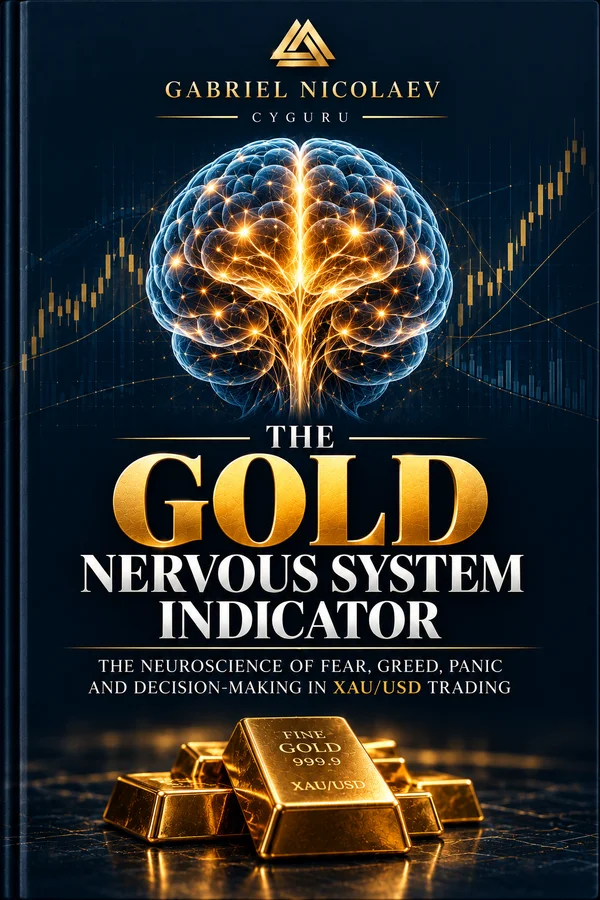
The Gold Nervous System Indicator
Discover the connection between the human factor and gold trading.
Discover the book ↗Read the book overview →Sources & further reading
- NSI.GOLD — Framework, methodology and validation status ↗
- Gabriel Nicolaev – CyGuru — The Gold Nervous System Indicator ↗
Sources consulted 27 October 2026. Editorial frameworks and illustrative examples are identified within the text.